First, look at the pattern
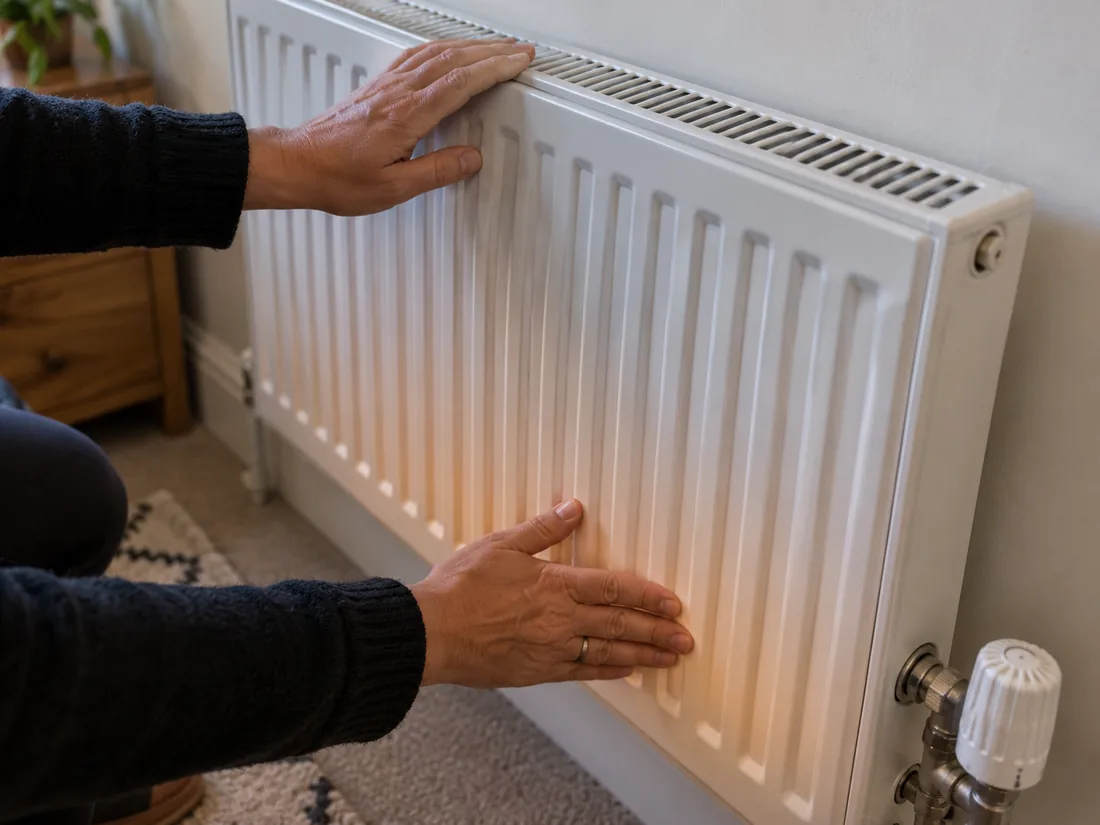
Before changing anything, notice which radiators are affected and how they feel once the heating has had time to warm up. Is it one radiator or a whole part of the house? Is the radiator cold all over, cold at the top, cold at the bottom or simply cooler than the others?
These observations do not provide a diagnosis on their own, but they help an engineer narrow down the likely causes. They also stop several different problems being grouped together as the same vague complaint that the heating is not working properly.
- One radiator is cold while the others heat normally
- The top is cold but the bottom is warm
- The bottom is cold but the top is warm
- Upstairs heats but downstairs does not, or the reverse
- Every radiator is cooler than usual
Cold at the top can mean trapped air
Air can collect in the upper part of a radiator and prevent hot water filling it fully. The usual sign is a radiator that feels warm lower down but remains cold across the top. Bleeding may release the trapped air, but only follow the instructions for your own heating system and stop if you are unsure. The water can be hot.
After radiators have been bled, a sealed heating system may need its pressure checked and adjusted according to the boiler manufacturer's instructions. If air returns repeatedly, the system loses pressure or you find a leak, arrange an inspection instead of repeatedly topping it up.
Cold at the bottom can point to restricted circulation
A radiator that is warm at the top but cold across the bottom may have a build-up of debris restricting the flow of water through it. Sludge and corrosion products can collect over time, especially in older systems or systems where inhibitor levels have not been maintained.
Cleaning one radiator may not address the condition of the wider system. An engineer can assess the water, filters, radiators and circulation before recommending anything from targeted cleaning to a more thorough system flush. The right treatment depends on what is actually present, not simply on the age of the radiators.
A completely cold radiator may be a valve or flow issue
If a radiator is cold from top to bottom while nearby radiators are hot, check that its thermostatic radiator valve and the valve at the other end have not been turned off. A thermostatic valve can also stick after spending a long period closed. Do not force it or dismantle the valve if it does not move normally.
A cold radiator can also be caused by poor balancing, an obstruction or pipework that is not receiving enough flow. Balancing adjusts how water is shared around the system. It is particularly relevant when radiators close to the boiler become hot quickly while those farther away remain cool.
Several cold radiators suggest a wider problem
When a group of radiators is affected, look for what they share. They may be on the same floor, in an extension or on one branch of the pipework. If all radiators are cool, the issue may involve boiler operation, system pressure, the pump, controls, circulation or the temperature settings rather than the individual radiators.
Check the thermostat and programmer are calling for heat and look at the boiler display for a fault code. You can also compare the pressure shown with the normal range in the manufacturer's instructions. Do not remove the boiler casing or attempt work on gas or internal electrical components.
When to call a heating engineer
Arrange professional help if the problem persists, several radiators are affected, pressure keeps falling, a valve or radiator is leaking, the boiler shows a fault, or you are not confident carrying out the basic checks. Turning the heating up higher rarely fixes a circulation problem and can waste energy while leaving the cold rooms unchanged.
Heatdial can inspect the system across Clitheroe and the Ribble Valley, identify why heat is not reaching the affected radiators and explain the sensible next step. That may be a small adjustment, a repair or cleaning work, but it should follow a proper assessment.